
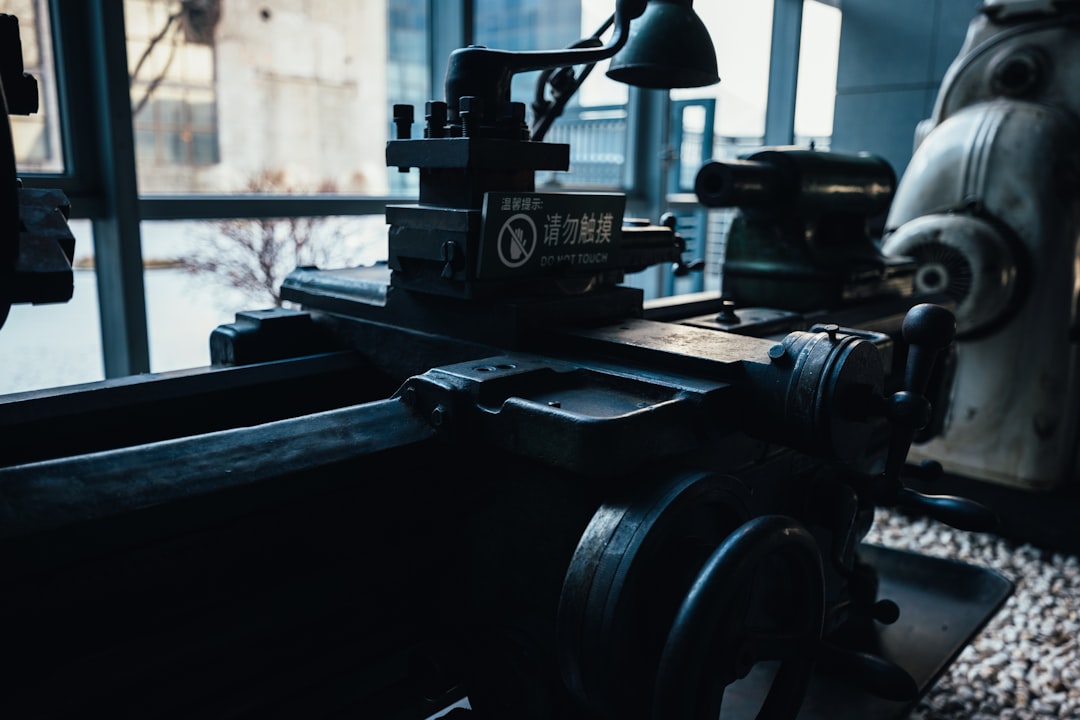
Modern industry depends on parts that do more than simply fit together. They must perform consistently under pressure, maintain exact dimensions across production runs, and support the reliability of the equipment around them. That is why precision machine manufacturing has become a defining capability for sectors where accuracy, repeatability, and production discipline matter. At AIR-QC CO., LTD | PRECISION MACHINE MANUFACTURING IN THAILAND, innovation is not a matter of novelty for its own sake; it is a practical commitment to producing components that meet demanding technical expectations with confidence and consistency.
As manufacturing standards rise across automotive, industrial, electronics, and specialized engineering applications, companies increasingly look for partners that can combine modern machining with strong process control. In this environment, the value of a manufacturer is measured not only by its machines, but by how well it integrates planning, inspection, material understanding, and production know-how into a reliable system.
The New Standard for Precision Machine Manufacturing
Precision machine manufacturing today is shaped by a simple reality: tolerances are tighter, product lifecycles are faster, and customers expect stability from prototype through full production. This has pushed manufacturers to evolve beyond conventional workshop practices and adopt a more integrated production model.
At a high level, this shift includes several important changes:
- Greater emphasis on repeatability, not just one-time accuracy.
- Closer alignment between design intent and shop-floor execution.
- In-process verification to reduce variation before it becomes a defect.
- Better material and tooling decisions based on end-use requirements.
- Stronger documentation and traceability to support quality assurance.
For manufacturers in Thailand serving both local and international markets, these expectations are especially relevant. Buyers want dependable lead times, stable quality, and technical communication that supports long-term production. This is where AIR-QC stands out, combining manufacturing capability with a disciplined quality mindset that reflects the needs of modern industry.
Core Technologies Driving Better Results
Innovation in machining is often discussed in broad terms, but the most meaningful advances are highly practical. They improve dimensional control, reduce production risk, and allow a manufacturer to handle more complex geometries and tighter requirements with confidence. For companies seeking dependable precision machine manufacturing in Thailand, these capabilities signal a partner that understands both engineering demands and production realities.
The following technologies and methods are particularly influential in modern precision operations:
| Technology or Method | Primary Function | Manufacturing Benefit |
|---|---|---|
| Advanced CNC machining | Produces highly accurate parts with controlled repeatability | Supports complex shapes, stable tolerances, and efficient batch production |
| CAD/CAM integration | Connects design data directly to machining strategy | Reduces interpretation error and improves process consistency |
| Precision tooling selection | Matches cutting tools to material and geometry requirements | Improves surface finish, extends tool life, and reduces dimensional variation |
| In-process inspection | Checks dimensions during production rather than only at the end | Detects drift early and minimizes scrap or rework |
| Environmental and process control | Stabilizes machining conditions and measurement reliability | Supports tighter tolerance management and more dependable outcomes |
What matters is not merely owning advanced equipment, but knowing how to use it in the right sequence with the right controls. Skilled setup, fixture design, programming logic, and inspection planning all affect the final result. AIR-QC’s value is tied to this full-process approach, where technology supports workmanship rather than replacing it.
How AIR-QC Builds Quality into the Process
In precision machine manufacturing, quality cannot be left to final inspection alone. By the time a defect is found at the end of production, time, material, and machine capacity have already been consumed. The stronger approach is to build quality into each stage of the workflow so that potential issues are prevented or detected early.
AIR-QC’s operating philosophy reflects this principle. Quality is strengthened through clear production planning, controlled machining conditions, and careful verification at key stages. This structure is especially important when producing parts that must perform as part of larger assemblies, where even minor deviations can create downstream complications.
A disciplined production flow typically includes:
- Requirement review to confirm drawings, tolerances, materials, and end-use expectations.
- Process planning covering machine selection, tooling, setup method, and inspection points.
- Trial and first-piece validation to ensure the setup performs as intended before larger runs begin.
- In-process monitoring to verify critical dimensions during machining.
- Final inspection and documentation to confirm conformity before release.
This kind of structure is especially valuable when projects involve demanding tolerances, precision mating surfaces, or consistent repeat production. Rather than relying on correction after the fact, it creates a controlled path to accuracy. That is one of the clearest markers of a mature manufacturing partner.
Material Knowledge, Surface Quality, and Application Fit
No discussion of precision machine manufacturing is complete without addressing materials. The same geometry can behave very differently depending on whether the workpiece is aluminum, stainless steel, engineering plastic, or another specialized material. Cutting speed, tooling choice, heat generation, chip control, and finishing strategy all change with the material, and those variables directly affect dimensional stability and surface quality.
This is where practical manufacturing experience becomes essential. Good machining is not just about removing material accurately; it is about doing so in a way that preserves the part’s intended performance. A component used in a pneumatic system, fixture assembly, industrial mechanism, or automated equipment may require specific properties such as corrosion resistance, low friction, structural integrity, or clean surface condition. The production method has to support those needs, not compromise them.
Manufacturers that consistently deliver high-value results tend to pay close attention to:
- Material behavior during machining, including thermal movement and cutting response.
- Surface finish requirements, especially where sealing, sliding, or visual quality matters.
- Dimensional relationships between critical features, not just isolated measurements.
- Fit-for-purpose tolerances that reflect real application needs.
AIR-QC’s role in this context is not limited to machining parts to print. Its broader strength lies in understanding how machining decisions influence final function, which helps support a better balance between manufacturability, quality, and application performance.
Why Precision Machine Manufacturing in Thailand Is Gaining Attention
Thailand continues to strengthen its position as a manufacturing base for regional and international supply chains. The country offers established industrial infrastructure, strong links to major production sectors, and a growing demand for capable precision suppliers that can support both customization and repeat production. For buyers, this creates an opportunity to work with manufacturers that combine technical capability with practical responsiveness.
Within that landscape, AIR-QC CO., LTD represents the kind of company many industrial customers look for: focused, technically grounded, and committed to quality at the production level. This matters because precision work is rarely about scale alone. It depends on attention to detail, reliable process execution, and the ability to translate engineering requirements into stable manufacturing outcomes.
When evaluating a precision manufacturing partner, decision-makers are often best served by looking beyond general claims and focusing on fundamentals:
- Can the company handle tight tolerances with repeatability?
- Does it use inspection as an active process tool, not just a final checkpoint?
- Is there clear control over materials, setups, and machining workflow?
- Can it support ongoing production needs with consistency?
These questions go to the heart of manufacturing credibility. They also explain why precision-focused businesses with disciplined systems continue to earn trust in competitive markets.
Innovation in precision machine manufacturing is most valuable when it leads to better accuracy, stronger consistency, and more dependable performance in real production. That is the standard manufacturers must meet today, and it is the standard AIR-QC CO., LTD continues to reflect in Thailand. By combining advanced machining practices with process control, material understanding, and a quality-first mindset, the company demonstrates that modern manufacturing excellence is built through precision at every step. For businesses that need components produced with care, reliability, and technical discipline, precision machine manufacturing remains not just a service, but a critical foundation for long-term operational success.
************
Want to get more details?
https://www.air-qc.co.th
air-qc.co.th
+66 (0) 95 541 7979
AIR-QC Co., Ltd. is a precision engineering and industrial machine manufacturing company based in Rayong, Thailand that emphasizes Finnish engineering excellence in its approach and solutions and specializing in CNC machining, metal fabrication, automation, prototyping, and assembly for global industries.

